At this year’s Whisky Live event in Tel Aviv, one of my purchases was from The Drunken Owl distillery. This is a cask-strength (63%) rye whisky. As the label puts it:
Mashed from rye, malted barley and local well water. Over a week-long fermentation. Double distilled in a uniquely designed pot-still. Matured in a single, re-charred, ex-wine oak cask.
The founder and head distiller is Nir Dotan. So far as I can tell, he’s working with the Srigim Brewery which is about halfway between Jersualem and Ashdod. [This reminds me. I may need to do some posts about Israeli beers. There are many good quality boutique breweries in operation here.]
While I like whisky a lot, I don’t profess to be an expert. My taste buds are not so sophisticated that I can easily tell whisky types apart. The only advice I’ll give is that people should drink the whisky they like, not what other people tell them to like. For example, my preference is single malt Scotch whisky of the peaty type (like the Islay masters Laphroaig and Lagavulin) but my favorite whisky of all time is a Mortlach (from Dufftown in Speyside) and that’s not peaty. On the other hand, I’ve been know to enjoy Japanese whisky and many a blended whisky.
When it comes to Israeli whisky, Milk and Honey is undoubtedly the market leader. But there are other players and it’s worthwhile tasting their produce.
Talking of taste, last Shabbat my Friday night alcohol of choice was The Drunken Owl. What did it taste and smell like? Well, at full strength, it was overpowering. The bouquet is amazing; rich and warm. But the taste was too strong for me. However, with a little added water, it became one of the smoothest whisky drinks I have had in a long time. Watered down, the bouquet loses a lot, but that’s more than made up for by the taste. There’s a hint of spice and a warm glow to finish.
I’ll probably end up all whisky posts the same way…recommended!
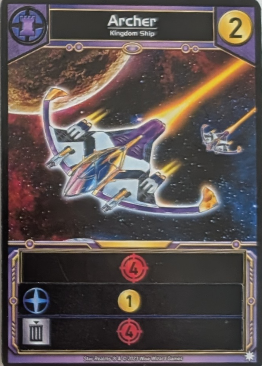
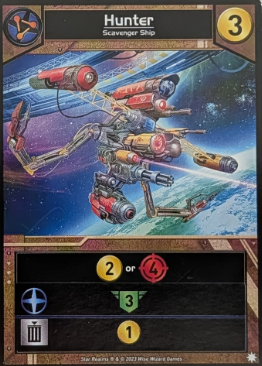
Star Realms is a non-collectible deck-building card game, primarily suited for two players (though multi-player is possible) with a science fiction theme and easy core mechanics. Each player starts with his own small deck and 50 authority (life). The first player to reduce his opponent’s authority to 0 wins.
This nifty device, making it easy to track your authority (life) comes with the game.
Card play provides resources, combat damage, and boosts to your authority (life).
You use the resources to buy new cards to add to your deck. But first, in general, they go to your discard pile and so take time to be available.
You use the combat damage to reduce your opponent’s authority.
You add boosts to your own authority, making it harder for your opponent to win.
In your turn, you may play all of your cards. At the end of your turn, played cards and purchased cards go to your discard pile, and you draw new cards from your deck. When your deck is exhausted, you take the discard pile, shuffle it, and that’s your new deck.
Most cards belong to a faction. Some cards have a basic effect and an additional effect that is available if you simultaneously play a card of the matching faction. Therefore, making your purchases has some strategic depth as you want to be able to trigger additional effects, but you also don’t want to focus only on one faction.
Some cards trigger an effect when you buy them. It’s important to also maximize these effects, but it can be tricky.
Some cards are bases and these, when played, stay on the table and continue to have an effect each turn unless your opponent destroys them. One type of base (outpost) even protects you by taking damage before your own authority is hit.
There are several games using the same key mechanics but with a different twist. This version is a campaign game of twelve scenarios with the following features:
Each player takes either the Star Empire or Trade Federation. Each starting deck is slighly different.
During play, you can upgrade your purchases and align them with your faction. This is done by applying stickers to your cards.
In each of the first four scenarios, you get a new set of upgrade stickers. In these scenarios you can also win by being the first to utilize five upgrades.
If your opponent wins four or more scenarios, you get one gambit for every victory over three he has. Gambits are typically one off benefits that reduce the cost of buying bases or add to damage of certain cards, and so on.
At a certain point random event cards are introduced. They do exactly what they say and tend to affect both players.
Roy and I just finished the twelve scenario campaign game of this Star Realms product. In the early scenarios, I built up a decent lead. But Roy was the clear winner in the second half and finally edged me out 11-10 in the final reckoning.
I suspect that, in a sense, I was penalized for being first to four wins as that gave Roy access to the gambits. They weren’t cards with big effects, but they were a definite advantage. By the time I got some, the pendulum had swung.
The events were not too powerful and added some surprise and variety to the game.
We enjoyed playing the game and it held our interest so that we were keen to complete the campaign. However, as Roy pointed out, once we had done the upgrades in the first four scenarios, the game seemed to lose its focus: there were no more new sticker sheets and the victory points available for being the first to upgrade 20 purchases didn’t seem much of an incentive.
The scenarios did a reasonable job of presenting a different type of game, but truly it’s all about how quickly you can kill your opponent. The exception is the last scenario. Spoiler alert! In the twelfth scenario, both players have to join forces to fight the Blob. The Blob uses different mechanics to generate damage against the players and there are some interesting challenges. That scenario, for me, was better than most of the latter half-dozen.
Basic Star Realms is fun. This version was also fun. It could have been better with a bit more work done on some of the scenarios, though. The physical quality of the game is very high. The rules are clear and easy to understand. I Have had more than my money’s worth because I played through to the end of the campaign. So, if you think you will manage to copmplete the campaign, I’d recommend it. Otherwise, not.
March 1974: 29 years after World War II ended, the last Japanese soldier, a guerrilla operating in the Philippines, surrenders. In China, farmers discover 8,000 clay warrior statues (The Terracotta Army) buried to guard the tomb of China’s first emperor Qin Shi Huang. At the Grammys, Roberta Flack’s “Killing Me Softly” wins the Best Record award.
April 1974: the Agranat Commission publishes its report on the Yom Kippur War. The Swedish Band Abba win Eurovision with their song “Waterloo”. Ray Kroc (San Diego Padres owner) tells fans “Ladies and gentlemen, I suffer with you… I’ve never seen such stupid ball playing in my life!”
Game Included
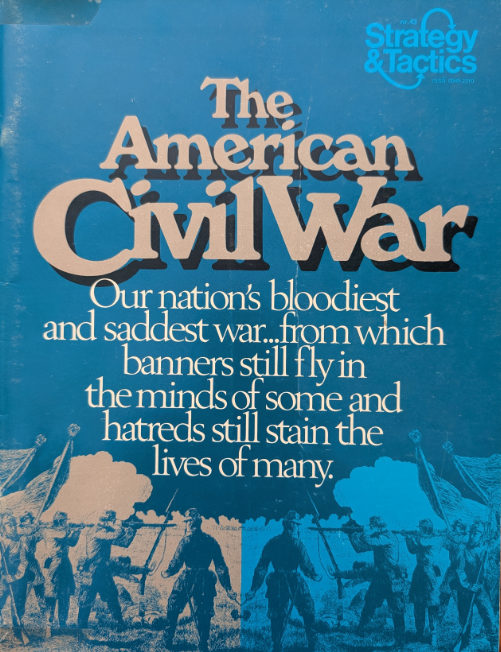
The American Civil War by James F. Dunnigan is a two-player strategic-level game about the whole civil war. There are ground and naval units backed up by forts and leaders. No unit nor ground scale is given. The map shows from New Jersey to the northern parts of Florida on the east coast and the southern part of Iowa down to Louisiana on the west coast. There are four turns in a year. One basic scenario covers the whole war with options available to adjust the historical setting to your tatste.
This game uses the (almost-standard) command control rule whereby certain of your units (occupying hexes whose last number matches a dice-generated number) will not contribute to the fight each turn. In this case, I would stick with the original rules as drafted. Why? Union reinforcements enter in Washington (6 Strength Points, hex 4507) , Cincinnati (3 Strength Points, hex 2607), and Cairo (2 Strength Points, hex 1513). While the Union Command Control Level is at 5 (which is where it starts), there is a 50% chance of Washington and Cincinnati being affected, and a 50% chance of Cairo being affected. It means the Union may struggle to get his troops into battle. It’s a nice wee design touch.
Between 1861 and 1865 the United States of America was almost torn apart in the bloodiest war in its history. In a strange conflict combining features of the Napoleonic Age with features of the Machine Age, fully 600,000 men perished fighting for sectional particularism, constitutional principle, economic self-interest and moral righteousness. And, in the end, vast changes were made in the nation, yet the nation remained unchanged. All with fateful implications for the present.
The Soldier Kings 1550-1770 – Frank Davis and Ron Toelke
But perhaps the best measure of the horror and cost of the Thirty Year’s War can be seen in the actions of the generations born soon after the conflict. For a century and a half following the Peace of Westphalia [24 October 1648], war was conducted with a degree of civility and restraint which is umatched in the entire length of the rest of history.
From page 42 of this issue’s Outgoing Mail referring to the then upcoming Tank! game:
Each tank is represented by two counters. A bottom one for the body of the tank and a top one representing the turret, which of course can be turned at various aspects.
On a Personal Note
This issue marked the end of my first year’s subscription. I remember looking back at the games received and thinking that renewing the subscription was a no-brainer.
The front page text is one of my favorite quotes. Perhaps that’s why this issue was also the tipping point for making the American Civil War one of my favorite historical periods – to read about and to game. The Gettysburg article in issue 38 was the spark and this issue converted it to a passion.
KampfPanzer by James F. Dunnigan is a two-player game about early tank warfare (1937-40) with each unit representing five tanks, a platoon of infantry, or a battery of guns. Hexes represent 100 meters of real terrain and each game turn is three minutes and forty seconds of real time. One of several distinctive features of the game is that it uses pre-plotted simultaneous orders.
Components
KampfPanzer was released with Strategy & Tactics 41. The counters (not backprinted) have silhouettes for vehicles and are pretty nifty. All are clear and easy to read.
The map is bare and dull. The rules are printed on one of the foldout pamphlets that were a regular feature of SPI’s output. (There’s a small amount of errata which you should track down if you want to play the game.) There’s also a separate sheet with scenarios, historical notes, and the charts and tables.
Game Turn Sequence
Each game turn includes the following:
Simultaneous Movement and Combat Plot Phase
Panic Determination Phase
Combat Execution Phase
Panicked Movement Plot Phase
Movement Execution Phase
Disruption Removal PhasePlaying the Game
Playing the Game
To get me in the right place to do this post, I chose Hannut from the nine available scenarios.
The game is not really suited for solitaire play given that you start each turn by writing out the detailed orders for each unit. The plotting system is well explained with plentiful examples, and in face-to-face play it adds a considerable amount of tension to the game play.
When playing this solitaire, I wrote out orders for one side first. Then, took a coffee break, returned and did the other side. To try and alleviate my knowledge of the other side’s orders, for the second side I tried to give each unit at least two sensible options and let the dice decide which one was selected.
Panic determination involves one die roll per side and a quick and easy process for finding out who has been affected. However, as with PanzerArmee Afrika, the system has its limits in that not every hex is equally at risk. For better play, I suggest using one of the options mentioned there.
Panic is a misleading term as it’s more to do with command and control. (And, in PanzerArmee Afrika, it was referred to as command control.) Units plotted to fire, don’t fire. Units plotted to move, do a random (die-roll determined) move. The latter was too chaotic and unrealistic for many players with several suggestions for house-rule replacements being touted. For sure, the result does give you a challenge because you cannot guarantee your units will do what you want them to do. In my opinion, that’s both a good thing and realistic.
Action from my replay of the Hannut scenario. The French, suffering from bad command and control, are outmanned.
The scenario runs for ten game turns. In the first game turn, both sides plot movement orders as each needs to head for the victory point area.
The French (with a Panic Level of 3) suffer a bad breakdown of command and control with several units going off in the wrong direction in the first turn. The Germans are untroubled. By the end of the turn, the French have a toehold on Hill 2, and the Germans are not quite there. Turn two sees the advance German forces start to arrive and turn three sees much combat. By the end of turn four, lots of damage has been down. Slowly, but surely, the German superiority in command and control tells – as does their superior firepower against the French infantry and anti-tank guns – and by the end of turn seven, it’s clear the Germans are going to win.
In this system, units take hits in terms of levels of disruption. There’s also a Pin result that prevents units with a move order from moving. You have to roll for recovery from disruption, so disrupted units are potentially out of the action forever if you roll badly. Pinned units automatically recover. I’ll admit the French recvovery rolls were awful. Such is war.
Good Stuff
The capability of the different types of unit (tank, infantry, guns) is portrayed well, as is the fact that the German tanks were not necessarily the best in the world.
This game is a great starting point for looking at creating your own game about tactical warfare in World War II. You get an impression – broad brush, to be sure – of what combat at the sharp end might have been like and a sure appreciation of the difference troop quality can make. It would be straighforward to replace the simultaneous plotting parts to make the game more solitaire friendly.
The simultaneous plotting adds to the tension.
Not So Good Stuff
This game doesn’t teach a lot about the tactics of armored combat of the time. You won’t see much of a difference between the German forces that were masters of the Blitzkrieg and for example the French forces that were, in general, swamped. The exception is that the German forces will have a better Panic Level and so be less prone to panic and not implementing your chosen orders. That’s a somewhat shallow differential, albeit it does highlight the advantages of (presumably) better command, control, communications, and troop quality. But the influence of artillery and air power, not forgetting radios, are sadly missing.
The unit ratings are a mystery to me. For example, the article in Strategy & Tactics gives armor thickness figures that don’t seem to directly relate to defense strength. The speeds given seem more closely related to each unit type’s movement points (MP). Here’s a sample of units with the armor thickness (as given in the article) and the defense strength in the game, then speed per the article and MP in the game.
*Note: there is no Pz IVD counter, only a PzIVE counter. The latter type wasn’t available till 1941 so I assume it’s a typo and is really the type D.
The numbers are close, but it appears there are other factors being taken into account when calculating defense strengths. There’s no hint what these might be – size, speed, metal quality – making it next to impossible to expand the unit coverage for DIY projects. At least speed and MP seem close enough.
The combat system has not aged well.
The scenarios are not especially engaging.
The map is drab and dreary, and looks unrepresentative of any real-life battlefield.
In Conclusion
KampfPanzer is an OK game and while I enjoyed my time playing it, this may well be the last time it hits the table, at least in its present format. Some people in the hobby developed the combat system for the related game Panzer 44 (though it has a different ground scale) and hopefully at some time I am going to try that out.
I remember being excited when this game originally arrived as part of my S&T subscription. Some 52 (!) years later, it’s less exciting, but I had some great times with KampfPanzer and I’m glad I got the opportunity to enjoy it.
OCHA is the UN’s Office for the Coordination of Humanitarian Affairs. According to their website:
…we bring the world together to tackle humanitarian emergencies and save the lives of people caught in crises.
We mobilize aid, share information, support humanitarian efforts, and advocate for crisis-affected communities.
OCHA is active in Gaza. You may recollect the infamous blood-libel (one of many it has to be said) about how 14,000 babies were going to die of starvation there. This was propagated by the head of OCHA, one Tom Fletcher.
So, the head of a UN body put out false information that demonized the Jewish state. And what were the consequences for him? None.
What, unsurprisingly, makes it worse is that OCHA have form for lying. Yes, you read that correctly: OCHA tell lies.
For example, in OCHA’s Humanitarian Situation Update of October 2, it says that one million Gazans have access to less than 6 liters of water a day. According to COGAT (the Israeli organization responsible for Coordination of Government Activities in the Territories) this is an outright lie. The true average is dozens of liters of water a day, “based on water pipelines from Israel, a UAE waterline to the Mawasi, an Israeli electricity line supplying electricity to the desalination plant in Dier al Balah, another desalination plant and pumping facilities. The amount of water available in Gaza is well above the humanitarian minimum.”
Here’s another example from that October 2 update. OCHA report that in Gaza city the supply of cooked meals went down by 70%, with only 8 kitchens operating. Sounds bad, doesn’t it? However, OCHA lied by omission: something like 80% of the Gaza city population moved south (so no wonder supply went down!) and there was a matching rise in the opening of new kitchens there.
For COGAT’s complete skewering of OCHA’s October 2 Update, check out this post.
It is incontrovertible that OCHA is lying. Why do they do that? Why do they do that repeatedly? Why are there no consequences for this?
In my opinion, in the UN:
Nobody cares about truth.
It’s all about how things look, and it’s important to make Israel look bad.
The people in the top jobs get paid huge salaries. Lying – to make the situation seem worse – is a form of job protection for those working for aid agencies.
Antisemitism is rife.
As the inimitable Elder of Ziyon notes, the UN is worse than useless. OCHA is merely one weed among many.
Let’s assume, for the purposes of discussion, that you are a bank robber. You have stolen something valuable, but it’s not easily convertible to cash. So, you need to hide it somewhere safe. You duly make your selection and wait.
From that point, you would take all reasonable measures to keep the loot safe. If, for example, you thought your loot might be discovered or be at risk from an advancing front in a war, you would probably move it somewhere else. Whatever might happen, you would do your utmost not to lose track of it. In short, there’s no way – on the balance of reasonable possibilities – that you wouldn’t know exactly where your loot is.
Hold that thought.
Today’s Times of Israel had an article with the subtitle text including this:
Hamas claims it returned all dead hostages it could find…
However, in the body of the article, it says this:
Hamas transferred two caskets containing the remains of two slain Israeli hostages, Inbar Haiman and Muhammad el-Atrash, on Wednesday night, as it claimed to have recovered the bodies of all the deceased captives “that it was able to reach.”
There is a difference between being able to find the bodies and being able to reach the bodies. The latter is probably much more likely, though even then I have doubts.
Remember Amalek Hamas
My starting point is that Hamas exists for three purposes. The first is to kill Jews. The second is to destroy Israel. The third is to expand and export their extremist, fundamentalist, Islamic doctrine.
Next up, go back to that thought I asked you to hold on to: bank robbers know where their loot is. As sick as it is, each of the hostages had a value for Hamas whether they started off dead or not. If they weren’t dead at the outset, Hamas will probably have tried to keep them alive because they were much more valuable in that state. Similarly, if they did risk them as human shields, it’s likely this will have been for use by high-ranking Hamas personnel. Therefore, I believe that Hamas knows exactly where all the bodies are. It may be that some of the bodies are under rubble, but I doubt this.
You will have seen the many Hamas operatives who surfaced after the fighting stopped. Where have they been hiding? At least one hostage who returned reported seeing dead hostages in the tunnels. It would be reasonable to expect Hamas would hide their loot in the tunnels, too.
But even if they are under rubble, Hamas knows where. So, what are Hamas playing at?
Given Hamas’ raison d’être, anything that causes Jews pain gives them pleasure. Holding onto the bodies of our hostages causes us much pain.
On the face of it, Hamas’ only leverage might be holding onto the bodies of our hostages. They might construct a plausible excuse – it’s the rubble, it’s the rubble – but only the gullible or the bigoted would unquestioningly accept this.
Regrettably, there are credible sources for the abuse our hostages suffered. It is therefore possible, that some of those bodies not yet returned have been retained because the evidence of abuse would be quickly established. The longer the bodies deteriorate, the more difficult it will be to establish cause of death and whether there was abuse and torture. (Yes, it makes me sick, too.)
If Israel holds back aid or tries to exert other direct pressure on Hamas to secure the return of the bodies of our hostages, Israel will – as usual – be vilified. I question the likely effect of such pressure. What might work is offering cash rewards for the return of hostage bodies, or even information about their location. I am aware that cash was offered for information about hostage locations before and it seemed to produce no result. Now the situation is different. Hamas may still be strong, but its reach is less, its territory is smaller, and it is no longer immune to external pressure from its sponsors.
Perhaps more importantly (or practically) if all that remains of Israelis in Gaza are the bodies of hostages, the restart of an Israeli offensive would not be hampered by having to avoid friendly-fire casualties. That may, ultimately, be the only way to secure the return of the last hostages. Israel must continue to show resolve in the face of Hamas’ obstinacy.
Right now, I wouldn’t like to be a Gazan. Hamas continue to prove they care not for their people. And yet there are many useful idiots in the West who seem to care, too much, for Hamas. Well, they may all be about to discover that the FO part of FAFO is not yet complete.
Date of publication (as given): January/February 1974
Context
January 1974: Start of the three-day week in the UK due to the energy crisis. The Miami Dolphins beat Minnesota Vikings 24-7 in Super Bowl VIII, at Rice Stadium, Houston.The $6 Million Man starring Lee Majors premieres on ABC TV.
February 1974: Playmobil toys debut at the Nuremberg Toy Fair. A bomb, planted by the Provisional IRA, explodes on a bus in West Yorkshire, England, carrying British soldiers and family members. Blazing Saddles, the Mel Brooks western comedy, premieres in California.
Game Included
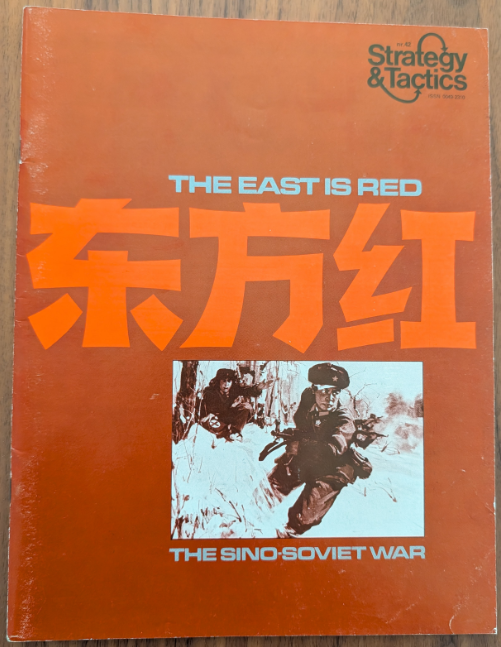
The East is Red by James F. Dunnigan is a two-player game about a hypothetical Soviet invasion of China in the 1970s. Units are at the division and corps level. Hexes represent 50km of real terrain and each game turn is one week of real time. One distinctive feature of the game is that it includes, as standard, rules for atomic warfare.
Within the theater of operations it is assumed that tactical nuclear weapons and atomic demolitions will be used.
The vulnerability of the Transsiberian Railway will pose a problem to the Soviet forces to permit them to actually wage prolonged war. However, the USSR is capable of using the seas, especially since China is not a sea power itself and cannot, therefore, threaten naval resupply except as the shipping gets close to port.
Napoleon at Waterloo – Albert A. Nofi
By 1800 the French had charged four times. Losses on both sides were extremely heavy, but at the end Napoleon’s cavalry was pretty much useless. Wellington’s cavalry was also more or less useless, having been expended in a series of countercharges, and his infantry was not in much better condition. Although no squares were reported broken, most were on the verge of collapse as a result of the heavy pounding they had received. The lack of horse artillery, beyond one battery which had somehow joined the charge, told on the French. With it, they might well have broken a number of squares. Without it, the cost of breaking squares became prohibitive.
The game in issue #44 will be Tank. This game will involve Tank-to-Tank combat during World War II…Tank, to give you fair warning, will probably be an unusual game. We are kicking around a number of rather radical game systems. The one that is currently a front runner for selection as the game system to be used relies upon a very different movement system. It is rather difficult to describe without actually showing it to you, but we’ll give it a try. Basically the one to five armored vehicles on each side will each occupy a hexagonal shaped area containing perhaps fifteen hexes across from one side to another. The actual playing board will be a much smaller area with each hexagon on the playing board representing one of the larger hexagons in which each side’s tanks actually maneuver. The actual playing board will be called the control board. The large hexagonal shape board will be the maneuvering board. A tank’s position will always be shown on the control board. That, in effect, will be its strategic position. Its tactical position will be shown on the manever board. We will have to use an as yet undefined system to show the terrain features on each of the many control board hexes. Each of the control board hexes, again, represents the much larger maneuver board hex. This system, hopefully, will allow for the sometimes substantial range differences between tanks, although we are aware of the fact that most tank battles occurred at under 500 meters range. The system just partially described makes use of control charts upon which each player keeps track of various mechanical functions for each of his tanks, such as current speed, position of turre[n]t, ammunition status, and the like. There is a lot more work yet to be done on the game Tank. In fact, it is not supposed to start, in theory, until January. But we usually get started on the design concepts far in advance of this.
Two points of interest. First, the version of Tank that was released bore no relation to the design described above. Second, note the emphasis on the design with no mention of scenarios.
On a Personal Note
This issue of S&T introduced me to the concept of gaming future, potential conflicts. The game, itself, was not of great interest and my recollection is that I hardly played it. The topic didn’t appeal to me. Also, the implementation – aside from the rules about nuclear weapons – had nothing novel.
I read the advert for War in the East knowing I had neither the funds to buy it nor the space to play it. By now I was realizing that if SPI kept up their output, I wasn’t going to have time to play all their games anyhow. As a gamer, that realization was depressing. I’m not sure I have ever recovered from it.
The worst single-day massacre of Jews since the Holocaust took place on October 7, 2023 corresponding with 22 Tishrei 5784 in the Jewish calendar and the festival of Simchat Torah.
The aftermath of that festival was immense grieving, sadness, and a relentless two-year war that saw Israel attacked again from all sides; militarily and politically. Against all the odds, we won. And today, with the return of the last of the living hostages, we have much to rejoice.
Our joy is tempered by the price our people paid, particularly by our soldiers. It’s also under a slight cloud as we await fulfillment of the promise to return the bodies of the remaining hostages. We hope and pray for their return soon.
This evening is the start of Simchat Torah 5786, so almost exactly two years by our calendar since the dreadful day of atrocities. The usual festival celebrations – dancing and singing as we end the yearly cycle of Torah reading and start afresh – will be infused with added energy and significance.
PanzerArmee Afrika (PAA) is a two-player game about the war in the desert from April 1941 to November 1942 designed by Jim Dunnigan. Game turns represent one month of real time, units are battlions, regiments, or brigades, and each hex is 12 miles.
PAA was released with Strategy & Tactics 40. The original components were good for their time, but now show their age. The counters are not backprinted. The map uses a limited color palette, is clear, and more than functional. Redmond Simonsen – responsible for Physical Systems Design and Graphics – produced some outstanding work at SPI and this early effort of his set a high standard. I don’t recall having any issue with the rules other than whether eliminated units get to counterattack (they do) and I worked that out by a close reading of the overrun process.
Note: SPI later sold the game to Avalon Hill (AH), who published their version around 1982. Images on this page are from the AH version. I have the original map and rules, but the counters are missing in action.
To give some context, before looking at the game’s key features, let’s start with the game turn sequence.
Game Turn Sequence
Each game turn has an Allied player turn followed by a German player turn. The game turn sequence is:
Supply Determination Phase
Command Control Phase (Allied player only)
Movement Phase
Combat Phase
Replacements and Reinforcements Phase
Supply
No game about this campaign would be complete without supply rules. PAA’s supply rules are easy and essential to master if you want to succeed. Supply flows from a source via depots (counters on the map). Depots can form a chain, extending supply as far as desired. However, you need to use your transport facilities (a truck counter) to move depots and you only have one truck. You can create another truck by sacrificing some units, but it’s a heavy price to pay.
Units more than 20 movement points from a depot (connected to a supply chain) are out of supply. They defend at half strength and can neither attack nor move. They are also known as sitting ducks.
Units within 20 movement points (and more than 8) of a depot (connected to a supply chain) are generally supplied, meaning they can move and defend at full strength, but their attack strength is halved.
Units within 8 movement points of a depot (connected to a supply chain) are attack supplied, meaning they can move, defend, and attack at full strength.
Units within 8 movement points of a depot (connected to a supply chain) which they consume in an attack are maximum attack supplied, meaning they attack at double their normal strength.
Therefore, in this game, you can quickly tell that each side needs to guard its supply lines. These straightforward rules do a nice job of representing the realities of warfare in this arena. You can quibble about the details, but the general impact seems to work.
A tentative start by the Germans as they ponder what route to take.
Command Control
Before the Allied player moves, he has to roll for command control. The result of each roll is 3 numbers. If the number of the hex a unit or stack is on ends with one of these generated numbers, the unit or stack sits on its hands for the turn and does nothing; it may neither move nor attack.
This implementation of a restriction on the player’s control of his units is interesting. It’s not the first time something like this was used as a similar limitation was applied to barbarian units in Fall of Rome. However, that was a case of the enemy to the solitaire player being handicapped. Here, it’s you – if you’re the Allied player – who has to contend with this. It’s realistic, but it’s clunky. As printed, players can (and did) try to minimize the effects by putting their units on hexes with humber endings that come up less often.
A better process to achieve the same goal was to make a pool of 10 chits and randomly draw three chits, refilling the pool after each draw. This way, each hex was equally at risk.
An even better option was to take a broad brush approach, ignore the existing table and hex numbers and instead roll a six-sided die for each unit or stack, 1-2 meaning the units were affected and 3-6 meaning they were free of any restriction. More rolls of the die, but more chaos.
At the time it didn’t bother me that the German player got off scot-free. Now, I’m more inclined to believe the rule should also apply to the German player, but less severely. For example, using the last mentioned option, only a roll of 1 would affect the German player.
Movement
The units in this game had huge movement allowances: 40 movement points (MP) for the Italians, 50 MP for the Commonwealth units, and 60 MP for the Germans. This gave the game a very different flavor.
In my limited playing experience, it made the Allied player focus every turn primarily on trying to prevent the Germans sweeping around the flank and cutting off supply. Only when that position was secure, could the Allied player think about advancing, slowly. I have seen online discussions suggesting the game was broken because the German player could always easily achive that flanking maneuver, but the responses and my own play leads me to think that it’s far from a given. The German player has his own challenges about keeping his flanking forces in supply. A cautious, careful Allied player – assuming command control doesn’t screw him over completely – should be able to stay out of trouble. The discussion, however, shouldn’t hide the fact that it’s fun to have such liberated movemnent abilities.
Where the large MP numbers do have an adverse affect is on the simulation value. PAA is a good game, possibly a great game, but having one side being powerless – ie., sitting still – in the face of the enemy’s huge movement potential, is not realistic. There were optional rules kicking about that gave the non-moving player some reaction ability. (Look, for an example, at the AH version.) I have no experience of them. If I had the time or inclination, I would experiment by halving the MP of all units and doubling the number of turns, so each represented two weeks.
Combat
PAA used combat differential instead of combat odds. So, 6 strength points (SP) attacking 2 SP gave a +4 differential. This was the same as if 12 SP were attacking 8 SP. However, despite the differeng size of forces, the potential casualties remained the same. The other new tweaks on show here, or at least new to me, were (a) allowing the defender a chance to counterattack, even if eliminated so that no attack was risk free, and (b) overrun combat, allowing a moving stack to eliminate an enemy unit or stack during combat if it had a high enough combat differential.
Reinforcements and Replacements
PAA was also unusual in having reinforcements and replacements arrive at the end of a game turn instead of the more usual arrival at the start. This may have been done to make it easier for the Allied player who has to cope, additionally, with units being withdrawn. Dealing with the requirement at the end of the turn gave the Allied player extra time to get the withdrawing units back home. Failing to do this allowed the German player to pick the withdrawing unit; something to be avoided.
Overall
PAA is a good, challenging game. It’s easily accessible, there are not too many counters to maneuver and you can get through some turns quite quickly. Combat is never risk free because even an eliminated force gets to counterattack before dying. It was innovative in its time and remains a benchmark design. To prepare this article, I took the game out for a spin and solitaired a few turns. It was fun.
The strikes against it are that it is too long at 20 turns (unless the Germans capture Alexandria), the command control procedures need to be simplified, and it falls short as a simulation. For example, the victory conditions give the Allies a marginal victory by holding Alexandria and having more than twice as many combat strength points as the Germans. The Germans can get a marginal victory by holding El Agheila and having more than half as many combat strength points as the Allies. There’s no incentive, in terms of victory, for either side holding Tobruk, for example. These conditions need tweaked to encourage more historical strategies. PAA would also benefit greatly from some shorter scenarios, and a decent reaction rule. (The AH one doesn’t convince me.)
Her’s the acid test: if someone asked me to play PAA, I’d gladly accept the challenge. PAA is a game that deserves to be played.