Robert Jackson Bennett
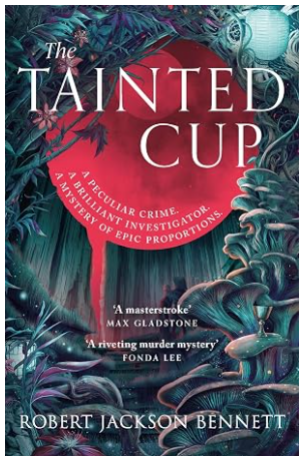
Note: this is a spoiler-free zone!
The setting is the Khanum Empire, a collection of cantons protected by huge walls from the seas and the leviathans — huge whale-like monsters with some land-walking ability — that periodically try to breach the walls and bring death and destruction to the land.
The Empire has mastered many technologies that allow them to create and change citizens to fulfil specific functions. For example:
- Cracklers who grow to eight feet tall and double or triple the size of ordinary humans, so named because their reinforced bones and joints make a distinct clicking or crackling noise whenever they move. They are used for very hard work duties like hauling heavy gear and servicing the massive sea walls. However, the biological modifications strain the human body, significantly shortening their lifespans.
- Engravers who are living recorders for the Iudex, the Empire’s investigators. They have a flawless photographic memory. They can perfectly record scenes and play them back later for analysis. They are easily identified by their gray-tinted skin. To calm their altered brains they develop grounding techniques such as smoking herbs.
- Apothetikals (known as Apoths) who are the Empire’s biotech scientists. Their job is to manage contagions — of which there seem to be a lot —and to engineer living infrastructure. (For example, fretvine, used for walls, towers, and gates and fernpaper, used for internal walls.) Apoths are physically modified to detect micro-scents, chemical compounds, and biological pathogens by smell. Their modifications cause parts of their faces to display a distinct purple discoloration
The plot involves the investigation of the gruesome murder of a high-ranking imperial official — killed by a tree that sprouted from his body — by Ana Dolabra, an eccentric investigator and her assistant, the engraver Dinios Kol.
In a way this is a fantasy reworking of the Sherlock Holmes and Doctor Watson relationship. Dolabra is the one who is a bit footloose and fancy free with the law, seeing everything faster than others and Kol is the one, sticking to the rules and doing the hard slog on the ground. However, this observation is not a criticism. Their relationship is well done, carefully developed, and taking everything into account, believable. It’s a solid foundation for this excellent novel. These two main characters are well supported by a range of other personalities.
And all the characters are, in turn, supported by a masterclass in worldbuilding. Architecture responds to the weather. Alchemy manipulates biology. There seem to be more modified humans than the regular kind! What others have described as ‘biopunk’, I found thoroughly enjoyable. It’s strange, but it’s clear the author has put a lot of work in making it hang together and you do get used to it.
The plot is reasonably well crafted, the twists are sufficient, and the pacing is just about right. If there were any patches of self-indulgent overwriting, they passed me by. To nitpick, the one minor part that grated was a certain love interest. It didn’t work for me. YMMV.
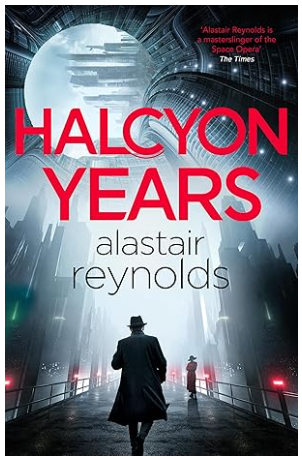
I read this immediately after Halcyon Years. In both novels, the setting is key. In Halcyon Years, the setting is refreshingly different and presents a puzzle that isn’t initially revealed: why is the technology limited? It’s an open question if revealing the secret behind the limited technology means the setting won’t be as attractive in any future stories in the Halcyon.
By comparison, in this book, right from the first ‘biopunk’ reveal, you sort of know what’s going on and you’re keen to see what other weird and wonderful phenomena are there to discover. It’s also clear that there is lots more about this world to discover.
I can see why The Tainted Cup won a Hugo. It’s a delight.